Updated 02/12/2025
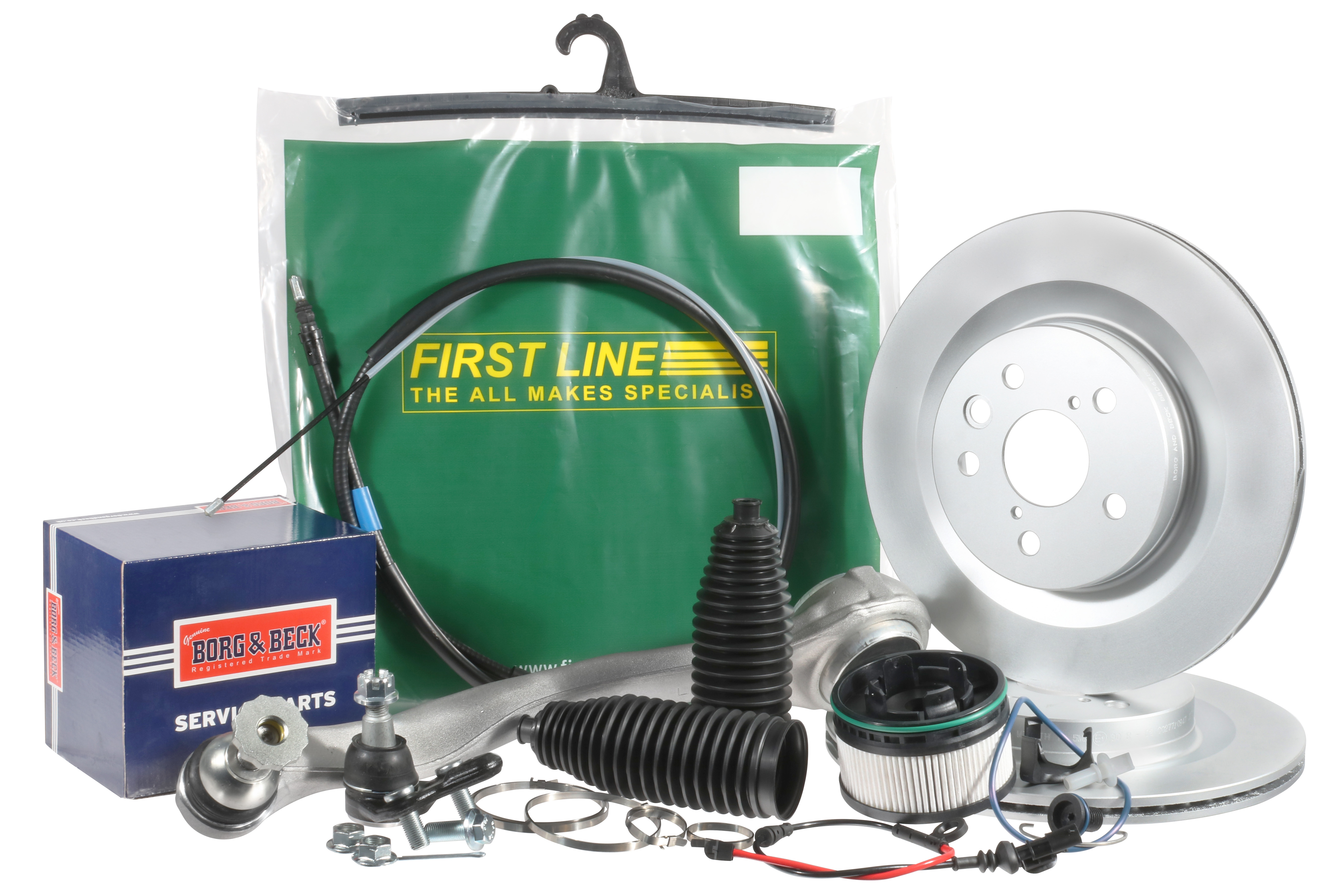
Bringing a new automotive component to market is not a simple matter of identifying demand and placing an order. For First Line Ltd, each part added to the range goes through a rigorous, multi-stage development and approval process designed to ensure accuracy, reliability, and confidence for distributors and workshops across the aftermarket.
Here’s how a component moves from initial concept to becoming a fully approved, ready-to-fit First Line, Borg & Beck or Key Parts product, and why that matters for every business in the supply chain.
1. Identifying the Opportunity
Every new part begins with intelligence gathering. The Product Management team analyses OE data, market trends, supplier insights and car parc information to understand where demand is emerging. Applications are cross-checked against OEM EPCs and TecDoc to verify fitment and coverage.
This early research ensures that new-to-range additions respond to real-world demand, whether it becomes a fast-moving component, an emerging application in the car parc, or a niche part that distributors and technicians have been struggling to source reliably.
2. Drawing or Sample Requested
Once a part is validated as a worthwhile opportunity, First Line Ltd. requests either a physical sample or technical drawings from its manufacturing partners. If additional measurements, material specifications, or performance data are needed, this is gathered at the same stage.
This step is fundamental - accurate technical information is the backbone of the company’s philosophy. It allows the team to understand the OE design before any tooling or production decisions are made.
3. Technical Review and Approval
The supplied drawings or samples are examined in detail by the First Line Ltd. product team. Dimensional checks, material assessments, and critical-to-quality characteristics are verified against both OE specifications and the company’s own internal standards.
Only when the product team is fully satisfied is the part approved for development and stored on the First Line Ltd. network. This review acts as an early gatekeeper, to ensure absolute accuracy long before manufacturing ever begins.
4. Part Number Created
Once technically approved, the part moves into the catalogue creation stage. A unique First Line, Borg & Beck or Key Parts part number is assigned, and all application data is added into the catalogue system.
At this point, the part officially enters First Line Ltd’s internal pipeline, but it is not yet available for sale. Early creation of the part number allows teams across Sales, Purchasing, Cataloguing, Logistics and Marketing to begin preparing for its eventual launch.
5. Automatic Quality Flag Applied
Before the first shipment even leaves the plant, the part is flagged for enhanced scrutiny. This internal quality marker ensures that upon arrival in the UK, the part is directed immediately to First Line Ltd’s quality control team to allow for thorough checks to take place against the original drawings or sample, prior to the product bring put into stock.
This step is especially important for new-to-range additions, where the batches must prove consistent performance and build quality.
6. Manufacturer Order Placed
Only after passing technical approval and documentation checks is the initial production order placed with the manufacturer. Tooling, materials and production planning are initiated, and First Line Ltd communicates all quality standards and expectations clearly to its manufacturing partner.
This structured approach sets the stage for a smooth first delivery, ensuring consistency from the very first batch.
7. First Delivery Received
When the first shipment arrives, it triggers a comprehensive quality inspection. This includes functional checks, visual assessment, packaging review, and verification of barcoding and labelling.
No part is released into stock without clearing this stage. This is deliberate to ensure that all products are thoroughly inspected prior to being made available for sale to give absolute confidence to both distributors and workshops of First Line Ltd’s consistency in specification against the OE unit.
8. Supplier Drawing and Sample Verification
In addition to physical checks, the quality control team compares the received parts against the original drawings, samples and specifications. Key dimensions are measured, tolerances checked, and batch codes inspected.
This ensures that what was approved at Stage 3 is exactly what has been manufactured at scale. Any discrepancy, however minor, is flagged for further investigation, and the product is withheld from sale.
9. If a Part Is Rejected
If a part fails to meet First Line Ltd’s standards, it is placed in a quarantine area so that the issued can be discussed with manufacturing partners and rectified. This may include scrapping any parts not meeting First Line Ltd’s strict high standards of excellence it places on itself. This stringent approach prevents substandard products from ever reaching customers and reinforces First Line Ltd’s emphasis on long-term quality rather than short-term volume.
10. Released to Stock
Only once the part clears every check is it officially released as a New-to-Range (NTR) item. It enters into stock, is published in electronic catalogues, and becomes available for distributors and workshops to order.
For the aftermarket, this final step represents more than a new product, it’s the reassurance that every component in the First Line Ltd catalogue has passed through a robust, systematic approval process built on accuracy, reliability and quality.
In Conclusion
As vehicle platforms evolve and demand for precision-engineered replacement parts continues to grow, the importance of a disciplined, transparent and technically robust development process has never been greater. First Line Ltd’s strict New-To-Range process shows exactly what it takes to bring a part to market responsibly, from the initial identification of demand to the final sign-off that ensures every component meets the standards expected by distributors, technicians and end-users alike.
For the aftermarket, this level of scrutiny doesn’t just deliver confidence; it ensures customer trust, and keeps the supply chain moving with the assurance that every newly launched reference is ready to perform from day one.
For more information on First Line’s range and product groups please visit: www.firstlineltd.com. To see what vehicles are covered by First Line’s range, please visit the online catalogue at https://webcat.firstline.co.uk/Home